Awe Town

Aweland is a vast expanse of land part of which had earlier been occupied by a group headed by Ladun who is an ijesha man that settled at Olaromi in the 13th century. Prominence was not given to the history of the settlement until when a more dynamic group came to settle in the area in the 17th century headed by Ilemolu Olutokun, Ladokun, Ikumawoyi and Mafile. They are Ife princes who had moved out of Ile Ife after some misunderstanding on crown distribution. They settled at Egba Gbagura now called Ibadan for some period, ruled under the kingship of Ilemolu who lead his junior princes out of the town again because of some injustice. They then decided to come back towards Ife and got to the area where Ladun and the other have settled.
They moved farther afield and got to the place where Ifa told them to settle, that is, beside an Aruwewe tree from where the name Awe have been derived. Later they persuaded the other group come over and take shelter in the Awe kingdom. Thus Oladokun, the second in command was made the Alaawe because Ilemolu who had reigned before decided to concede as a result of old age thus acting as the father of all. Ikumawoyi was made to assist and understudy Ladokun in the palace. By 1750, Ladokun had been firmly established on the throne and in command of all the areas now known as Aweland.
After they had settled down, they decided to invite Ladun(the Ijeshaman) together with his group to move down to Awe for maximum protection, and possibly to make sure that there is also maximum co-operation in the area.
Awe as a town was organized by Oladokun 1 who can be regarded as the first Alaawe of the organized Awe. He appointed the chiefs, build the town hall known as Odi Amola/Odi Amolu and organized the town into four quarters after the important chiefs in the town viz Oke Abata, Oke Baasi, Oke Alaawe and Oke Odofin quarters.
It could be seen that Awe people had settled in this area by the 16th century, i.e.two centuries before Oja (Who later became Ashipa of Oyo) arrived in 1792. As the first set of settlers were law abiding the then Alaawe, Beyioku, accommodated them at Awe and later resettled them near the Ogun shrine and farm which belonged to Awe prince, Fakanbi, Alias "AWUYA". This is the area now called Ashipa area of Isale-Oyo. Atiba later came in around 1830 perhaps having learnt that Oja while in OBATE his father-in-law secured a friendly place for settlement, and hunted by the atmosphere of the pressures mounted by the Fulani calvary.
He too was granted refuge, first accommodation at Asoju compound, Awe before being transferred to Alaagba compound, Awe. When their number swelled and control became more difficult, due to their antisocial activities they were sent outside the walled city of Awe. Oja's initial Settlement was originally known as "Ago Oja" that is, Oja's cent. As time went on it became Ago d'Oyo and finally Oyo. This settlement of Oja in this area, which also gave him advantage of land acquisition, has been the age-long source of different between Alaafin and Ashipa.
Thus it can be seen that there is no way the Oyo people through the Alaafin can claim to be landlord over Oja talk less of Awe from the fact of history and there cannot be a master-servant relationship. This position had been supported by all legal battles (court case) on landed property between Awe and Oyo and also supported by the most acknowledge History of Yorubas by Revd Samuel Johnson.
The Awe side of the Ibadan-Oyo Ogbomoso road and beyond Odi Amola/Odi Amonu to Iwo boundary was not ceded to Oja/Oyo people. However, they were allowed to farm on part of this extensive land. The Oyo people were therefore tenants on Aweland and it is unfortunate that these tenants, with the death of original Awe ancestors, are now arrogating to themselves unimaginable rights and calling their settlement enclaves or homesteads forgetting that their original homestead is Oyo-Ile near Igbogo.
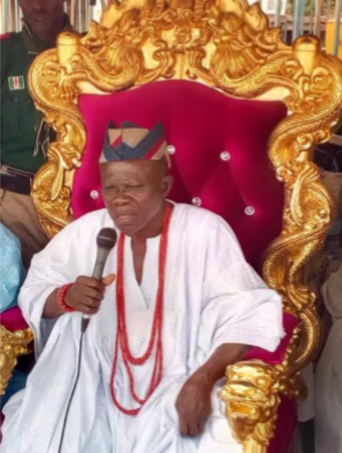
Explore the natural beauty, rich culture, and economic potential of this vibrant Nigerian community
Explore AttractionsAwe is located in the northern part of Oyo State, Nigeria, with coordinates approximately 8°10'N 3°44'E. It borders Kwara State to the north and Ogbomosho to the south.
Heavy rainfall, high humidity, lush green vegetation, ideal for farming.
Drier conditions with trees shedding leaves, suitable for harvesting.
Dry, dusty winds from Sahara with cooler mornings and evenings (~20°C/68°F).
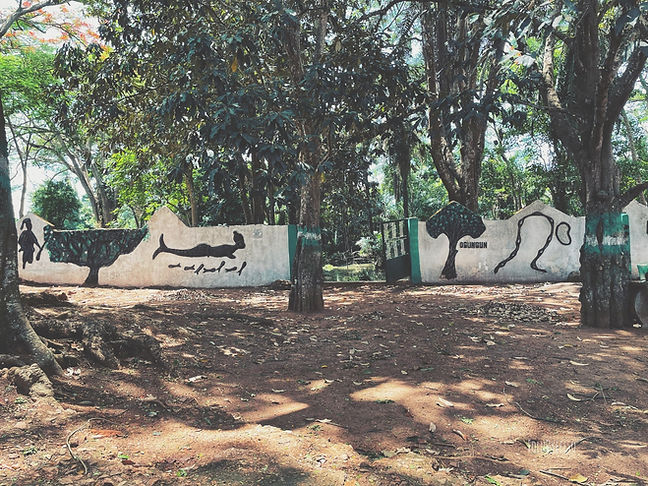
A gentle, clear stream with shallow pools (1-2 meters deep) with rocky and sandy banks, ideal for relaxation.
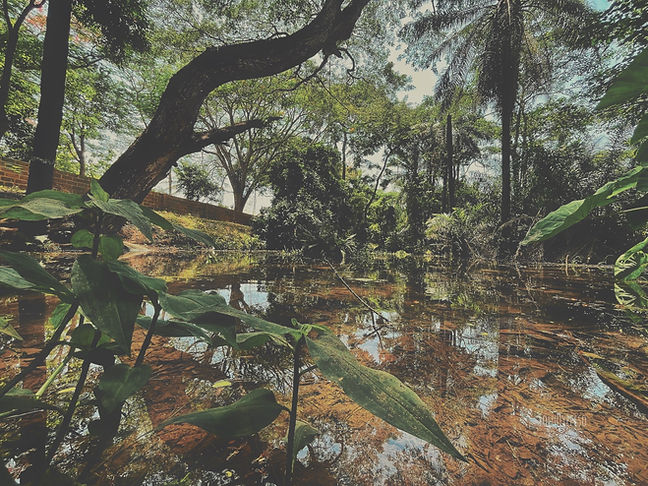
A sacred lake discovered in 1750, believed to be the home of a mermaid goddess with healing properties.
Also it is cover by cherry fruit
Annual celebration held around September or October featuring traditional dances, music, food, and rituals
Traditional dishes including:
Main cash crop: White yam, water yam, yellow yam
For fufu, garri, starch production
Maize, vegetables (okra, peppers, leafy greens), fruits (mangoes, guavas, pawpaw)
Driving economic growth and community development
Leading pharmaceutical company established in 1977, manufacturing high-quality, affordable medicines.
Leading player in Nigeria's agricultural sector, specializing in poultry production and the primary employer in Awe.
Among the community-focused NGOs working in Awe, Seyi Adisa Development Initiative (SADI) stands out as a model of consistent, care-driven, and impact-oriented development.
Operating at the intersection of youth empowerment, education, health, and community infrastructure, SADI has become one of the strongest catalysts for social progress in Awe and neighbouring towns consistently for the past 7 years.
SADI’s work is grounded in the belief that real development begins with people. - Through programs that prioritize skill acquisition, entrepreneurship, mentorship, access to healthcare, and educational support, SADI has created a system where young people in Awe and her environs have practical tools needed to unlock new possibilities. - From vocational training and digital literacy, football academy, among others, SADI as an NGO collaborates with individuals, philanthropists and other initiatives to provide a platform to mold talents for global opportunities.